Showing posts with label Science Tech. Show all posts

Scientific Study Proves That Masturbation Is Linked To Bad Luck


Before you start talking about how this isn't a "scientifc study", I need you to stop, pause and ask yourself...What exactly is a scientific study?
Well I'll tell you...
It's where a randomly selected number of people are seperated into groups and experiments are run, with the results measured in each group at the end of the experiment.

The experiment in this case is staying sober (i.e. refraining from masturbating) vs masturbating and the measured result is how each of these states have affected their lives.

If you were to look at all the comments in the thread above, you'll see a pattern.
Each of these people (both atheist and religious) have been honest and observant enough with themselves to come to the conclusion that masturbation steals from you and blocks favor.

I can personally attest to the truth of this observation as I experienced the same things whenever I masturbated back in the day!
Something is "taken" from you. An upcoming job that was going so well? A CURRENT job where coworkers suddenly turn into enemies who inexplicably want to see you fail? A budding relationship with your dream woman/man inexplicably going south as the other person just suddenly goes cold? The good grace to not have to deal with your car spoiling that week? There's always something.

It's like, masturbation is never actually free. A price is paid somehow...guaranteed.

There is a metaphysical aspect to it. A spiritual book-keeping. There are spirit beings you invite when you open yourself to it.

Did you know that Fluid and other sex fluids contain blood?
Think of how in some these shows or video games how sorcerers, before summoning some demon or using some heavy magic, first slice their hands with a dagger to draw blood? Blood is powerful and attractive to spiritual beings, and all magic to do with blood is powerful.

Did you know anything to do with sex is blood magic?
The purpose of sex is covenant creation/sustainance.

With sex, 2 people shed blood and open themselves to each other to assimilate and bond.
One's spilling of blood and opened soul due to immense pleasure met by the other person's blood and open soul.

Now what happens when a person sheds blood and opens soul in ecstacy...but there is no human 3rd party to meet it?
There are tons of spiritual entities around who won't let a good thing go to waste. They will quickly use the opportunity to bond with you.
You become that sorcerer who slashes himself with a dagger so he can summon something unnatural to his benefit.

....your benefit, being ecstacy. You didn't just masturbate, you had sex on another realm slightly removed from yours, with something far removed from the grace of God.

The night before every new day, God grants everyone a measure of grace and favor for the next day.
But you've exposed your storehouse of grace and favor for the day to a starving spirit devoid of God's grace, so it defiles your storehouse of grace and favor...and drinks all your damn coolaid.

Then you carry on with a day where a lot of good things scheduled to come your way, simple DON'T because the grace is gone. All used up.

At least with sex with a woman/man, you expose yourself to THEIR grace stores (which is why a man and his wife should knock boots more often dammit!!!), but with these entities, they are damned. They have no grace stores. It's just fully 100% parasitic.

So what about the bond with this damned entity?
This bond created, left unsustained, will naturally break. And the entity knows this. Don't think it'll allow this to happen easy. Your ecstatic shedding of blood and storehouse of grace is it's bread and butter.

This is the metaphysical reason why the longer you do it, the harder it then becomes to stop.
But good news! When you grapple with your self-control and win the fight by God's grace, and starve this entity, it leaves and eventually goes on it's damned way.

But before then, think of all the good things it cannibalized. All the missed opportunities it ate. Where your life would have been now if the grace and favor you needed for those critical, life-changing, once-in-a-lifetime moments were not stolen because of 10 minutes of pleasure that you thought was "free"...
Please, for the sake of your destiny, stop masturbating.

Did You Know About Webnet Naija

WebNetNaira operates through a refferal system which enables you to earn constant N2,000 for every new member that joins the programme through your link or username. If you become a member you will make money in several ways :

    Our referral programe pays all members instant N2,000 for every one person they are able to reffer to the program. Payments are paid directly into member's choosen bank acount in Nigeria or Voguepay account as an international member. You get paid an extra N400 for the people your powerlines are introducing. With WebNetNaira, You could be sleeping and making money.

 -   You get an instant access to download our free marketing resourse e-books, video lessons and softwares worth over $10,000(N1.5million). This makes you to become conversant with all other internet businesses, making you to become totally financially independent, gain personal freedom, total health and absolute happiness.

  -  All our downloadable marketing resource are attached with a Resellers Rights. That is, you can download them, edit them, re-sell them and the keep the money for yourself. Most members make money with this method.

   - Some of our resource materials are being expensively bought from the world richest internet gurus in the world, they are all free for our members to download.
    Yo u become a partner to our software company. You can sell our software's and make extra cash for yourself. Our software's can make for you as much as N30k/month. Login to see the available software's you can start selling.
   l. Are you a student? Then WebNetNaira is for you. You will have access to lots of Academic project materials. Project materials are available for Final year student at B.sc, M.sc and P.hd Leve

Take Note !

We are different from other internet marketers in Nigeria. We don't ask you to buy anything from us before you start making money, We don't compel you to sell anything online before you can start making money. With us, all you need to start making money online is just for you to bring in people to join the website, just tell them about how important this programme is to them, how they can free themselves from financial breakdown and to you, your money keeps rolling into your bank account.

The greatest reason why we continue to grow BIG is that our company is made up of young and researchable proffessional internet gurus. We constantly add new innovations, e-books, marketing software daily at our download section of the website at no cost, which futher makes our members updated about the newest internet products and information. We buy this expensive marketing softwares tools and put them at our download section for just our members to downlaod free and to make sure they make money online at no cost, but just to become a member of WebnetNaira.

They say good thing and opportunity comes once in a life time and if you are a wise one, you'lld grab it. We don't work for ourselves, we work to see our members succeed. Your success is our success. No programe you have ever seen that works as we do, No programe can pay you as we do. No programme can sacrifice for it's members as we do.

Here are other exclusive offers you will get from us.

   - All our e-books and softwares comes with a resell rights, meaning you can edit them and sell them at your own desired amount and keep the sales for yourself. We don't require any commission from you.

    You get paid (N2,000) for every member you introduce or joins the website through your link or usename. Imagine you bring in 4 persons a week, that is N8,000 that will be paid to you. You are also paid N400 extra for every single downline you make. .

    -With our system, you own a chance to get a promotional website to help promote you link or products.

   - You will have an access to download current and updated market resource materials worth over N1.5million for FREE.

    -All the required tools needed to help you sell your resell right products and to also help you promote your link is in the member area when logged in.

   - You have access to our 24hours assistance service providers.


Register Now

Eight Major Factors To Consider When Purchasing A Domain Name For Your Blog or Website


A domain name is an identification string that defines a realm of administrative autonomy, authority or control within the Internet.

These are the things to consider before buying a domain name


1. Go for a Top level domain name
Make sure the domain name you are buying is a top level one e.g. .com .ng .org e.t.c.
Just make sure it is very easy for your users to remember.


2. Avoid buying a contradicting domain name
For example, your website niche is on sports, you are now in need of a domain name and you buy .edu.ng extension, SO CONTRADICTING!!!
Always know that your guests and members will be the one looking for admission or other sort of education aspirants and they will bounce back when they see your
Posts mainly on sports.


3. Check if the domain is not existing
The perfect way to do this is to go to any domain registrar website and type the domain name, to know if it had been choosen or not, don't rely on that only, type
the url on search engines too and see if it already existed before you totally conclude.

Some webmasters are scammers, they will close their website for a while and when it had been sold to you, they retrieve it back again
when you gain much traffic.


4. Avoid too long domain name
For example, you want to buy a domain name for a website with music niche and you name it:
plentynaijamusicishere,com
That is wrong, go for a domain name that will be easy for everyone to remember.
It is not compulsory the domain is 6 or less letters word, but make sure it is easy to remember (either long or short) and also dont let it be too long.


5. Don't advertise your unpurchased domain name
Don't go to forums and ask for opinions on the new domain you want to purchase, before you
wake up the next day, it would have been purchased by a hungry scammer, you will have to pay them before they sell it to you and the money will be beyond your plan.


6. Avoid replacing words with letter
If you buy a domain name and make it 9jamusic,com instead of naijamusic,com if the second person with that naijamusic,com is your competitor, he can wipe you away within days, your visitor may just mistype that 9ja to
naija and fall for naijamusic,com immediately.
This always happen when people get to know your website name from the voice tag u put in a music.


7. Avoid going for a plural domain name
Buying a plural domain name which singular is already existing is very risky.
Adding s to the back of your domain name is very risky.
For Example, nairaland,com is already in existence, you then buy a domain nairalands,com, people will always/easily remember Nairaland and forget Nairalands except devoted visitors which are scarce and will be minimum.


8. Make Sure the domain registrar you want to
use are reputable and reliable
There are some hungry registrars, hunger lead them to domain business, if you fall for such
registrar, your money is waisted, search thoroughly about the hoster you wish to use and their years of service before buying from them.

Did you want to buy a domain (or host your website) i will recommend you choose and use WHOGOHOST

We are recommending them due to the experience we had with them, they are reliable and trusted.

It is not owned by a hungry registrar (lol), so you have nothing to fear.fear

Facebook ready to test Internet-beaming drones

Facebook on Thursday said it is ready to begin test flights of a high-altitude drone designed to provide Internet access to remote locations of the world.
The Aquila drone has a wingspan on par with that of a Boeing 737 jet; weighs less than a small car; can remain aloft for three months or so, and will beam Internet service to the ground from altitudes ranging from 60,000 to 90,000 feet (18,000 to 27,000 meters).
Yael Maguire, the engineering director of the project, told journalists the team had “achieved a significant milestone” with laser communications for high-speed data connections that are faster than most current speeds.
Using the drone could mean “quickly bringing connectivity to an area that needs it,” he said at a presentation at Facebook’s California headquarters.
“Our goal is to accelerate the development of a new set of technologies that can drastically change the economics of deploying Internet infrastructure,” Facebook vice president of global engineering and infrastructure Jay Parikh said in a blog post.
“We are exploring a number of different approaches to this challenge, including aircraft, satellites and terrestrial solutions.”
But he said this would not lead to Facebook becoming an Internet operator or carrier.
“Our goal is to provide the technology to other partners,” he said.
Aquila drones and using lasers to provide Internet connections are the work of a project devoted to finding ways to provide online access to the billions of people in the world who don’t yet have it.
Facebook last year unveiled its ambitious plan to use drone, satellite and laser technology “to deliver the internet to everyone” via the California-based online social network’s Connectivity Lab.
“A full-scale version of Aquila — the high-altitude, long-endurance aircraft designed by our aerospace team in the UK — is now complete and ready for flight testing,” Parikh said.
Data fired off by the lasers can hit a target “the size of a dime from more than 10 miles (16 kilometers) away.”
The lasers are being tested in real-world conditions.
“When finished, our laser communications system can be used to connect our aircraft with each other and with the ground, making it possible to create a stratospheric network that can extend to even the remotest regions of the world,” Parikh said.
He added that these technologies are useful because “10 percent of the world’s population lives in remote locations with no Internet infrastructure,” and it may be costly to deploy conventional systems like cable or cellular communication in these areas.

Wow!! Do You Know You Can NowLocate Your Lost Phone UsingGoogle Search? (Get In Here)

Losing your phone is a nightmare, and
things get worse when you know there
is hardly any way to track it down.
Well but if you are an Android user,
then you are in for a pleasant
surprise.
Google recently introduced a new
feature which can track down any
Android phone or tablet by simply
using ‘Google Search’. Here’s how it
works!
Step 1: Make sure you are using/share
the same Google account on your PC
and Android phone or tablet. (Even if
you aren’t, it will prompt you once you
type in ‘find my phone’ in the Google
search bar.)
Step2: Now type in ‘find my phone’ in
the Google Search bar.
As soon as you hit enter, Google will
start locating your phone on Google
Maps.
Give it a few seconds and your phone’s
preciselocation will be right in front of
you.
It even shows how far it is from where
you are sitting.
But what if your phone is under a
pillow or stuck in a bed side.
Well, for that, there’s an option called
‘Ring’ which will make your phone
ring at maximum volume for over 5
minutes.

7 Natural Tips to Reduce Lines and Wrinkles


Look in the mirror? Then it’s time to do something about them. You can reduce them with natural home remedies for laugh lines. You really don’t need any face lifts or injections to look beautiful and have smooth skin.
1. Facial Exercises
By exercising your facial muscles regularly they stay toned and the skin is firmer. So by all means don’t stop laughing. It is great for your facial muscles. But do other exercises as well, for example making a surprised expression and hold it for 10 to 20 seconds. Then switch to another extreme facial expression, for example with your mouth wide open.
2. Get Rid of Chemicals
Many of the chemicals you find in today’s face creams can actually cause more signs of aging. Products containing alcohol, mineral oil, and chemical preservatives should not be used if you want to keep your skin smooth.
3. Nutrients for Rejuvenation
Much of the rejuvenation of your skin is actually an inside job. Without the right nutrients your body can’t create healthy skin cells and keep your facial skin firm and smooth. But most of the food today contains less nutrients that it did before so it is wise to take a natural multi vitamin supplement as well as molecularly distilled omega-3 fish oil, which is vital for healthy youthful skin.
4. Stay Hydrated
You may know that most of your body is actually water, but it is also true that a lot of us walk around dehydrated most of the time. Dehydration causes your skin to age prematurely so be sure to always keep those water levels up. You can do it with other liquids to, for example fresh fruit juice or fruit smoothie.
5. Say NO to Toxins
For effective rejuvenation of your skin avoid toxins as much as you can. This naturally means avoiding things like smoking cigarettes, drinking excessive amounts of alcohol, eating junk foods on a regular basis, and even stressing. Yes, even being in a state of stress and worry impacts your skin.
6. Try a Face Mask
It is good to give your skin an extra intensive treatment every now and then. You can even make your own face mask at home with nourishing ingredients like oatmeal, raw egg, and cold pressed plant oil.
7. Moisturize with Natural Cream
Daily care of your laugh lines should include moisturizing with a natural cream. It should be made of ingredients that are proven safe and effective. For best effects on laugh lines and wrinkles, the cream needs to stimulate the growth of collagen and elastin, so that your skin becomes smoother and firmer.

This Man Controls His Robotic Arms With His Mind

This Man Controls His Robotic Arms With His Mind
The robotic arm looks like it came from the future, a sleek cyborg limb. But for Les Baugh, it’s a way to feel “back to human.” 
Baugh, who lost his arms in a teenage accident, had surgery to remap the nerves in his arms to work with the high-tech prosthetic, developed by engineers at the Johns Hopkins Applied Physics Lab. The New York Times followed Baugh as he tested out the cutting-edge technology, which he’s been training extensively to use. This is one of around ten Modular Prosthetic Limbs (“MPL”) in the world.
Since the MPL is modular, so it can be customized to work with different missing limbs and different bodies, and it has 100 sensors, 26 joints, and the ability to curl up to 45 pounds in weight. And, yep, he can control it with his mind.

How Cameroon’s Rolex award winner created Africa’s first medical tablet -

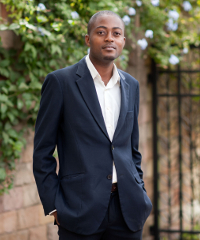
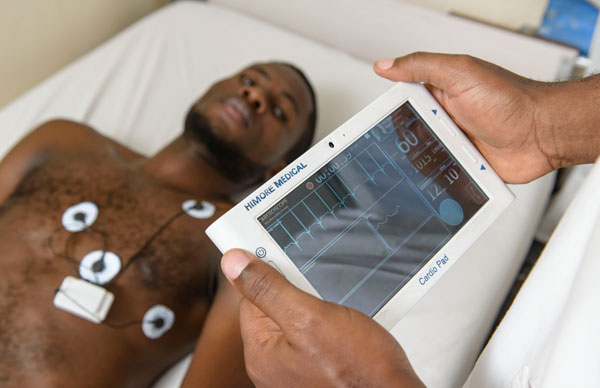
Arthur ZangCameroon’s Arthur Zang is the 26-year-old inventor of the Cardio Pad, believed to be Africa’s first medical tablet. The device allows healthcare workers in rural areas to perform cardiac tests and send results to specialists via mobile phone connection.
At the moment, two of Zang’s Cardio Pads are being tested by healthcare workers in Mbankomo, a small village 25kms outside of Cameroon’s capital city Yaoundé.
In an interview with How we made it in Africa, Zang explained the inspiration behind his invention.
“In Cameroon we have less than 50 cardiologists for more than 20m people, and all these cardiologists are located in the big hospitals which are in the city. So all the patients [outside Yaoundé and Douala] have to travel into the city each time they [need] an examination,” said Zang, Arthur Zang                                    explaining that this can be expensive and time-consuming for lower-income patients and make follow-ups difficult.
“So it is a very big challenge to solve this problem; to try and give all people the same attention.”
Zang’s patented Cardio Pad, which comes with a complete diagnostic kit, aims to solve this problem by allowing cardiac examinations to take place in rural locations by health workers who are not necessarily cardiac specialists.
A wireless set of four electrodes and a sensor are attached to the patient and transmits signals via Bluetooth to the Cardio Pad, taking a digitised electrocardiogram (ECG) reading of the patient’s heart function. The healthcare worker can then transmit this information to a national data centre, where cardiologists in urban centres can receive the ECG, make a diagnosis, and send it back to healthcare worker, along with prescription instructions. All of this can be done without the specialist ever actually seeing the patient directly.
According to Zang, his Cardio Pad and complete diagnostic kit can cost as little as US$1,000 to manufacture if the electronic components are available. “Sometimes it can be more… Electronic components designed for the medical field are really very expensive.”
Once manufactured, Zang expects that his company, Himore Medical, can sell the complete kit in the African market for between $3,000 to $3,500 – similar, yet less portable systems currently cost more than double this. “Compared to all the other devices that perform the same work, the Cardio Pad is very, very low cost,” he noted.
At the moment, the electronic components have to be manufactured in China, and then assembled in Cameroon, but Zang hopes that local manufacturing will be possible in the future.
Cardio Pad
The internet: an entrepreneur’s best resource
Zang completed his bachelor’s degree in computer science from the University of Yaoundé in 2007, and two years later did a master’s at the National Advanced School of Engineering of Yaoundé. In 2009, Zang (who was looking to apply his knowledge in developing medical solutions) met a cardiologist who outlined the challenge of addressing the needs of rural patients requiring cardiac examinations.
Zang decided to invent a portable medical solution, but needed to first gain the medical electronic know-how, which he did via the internet.
“In my country we do not have a lot of engineering schools where you can learn medical electronics or bio-medical engineering. So when I wanted to design the Cardio Pad, I decided to teach myself medical electronics online. This is how I learnt electronics, learning for six months… After this I was able to design an electronic device. It was a very big challenge to learn the technology, and the internet is a very good tool to learn.”
Finding financing to build his prototype also proved to be a major obstacle, with banks unwilling to loan money to a student without guarantees. However, Zang’s mother was able to get a $1,300 loan from a bank which financed the production of his first prototype. Armed with this, he then used social media like Facebook to find further funding.
“With that prototype I made a video demonstration and the president of the country gave me $30,000 and this allowed me to manufacture the first 20 devices,” he said. “And after the manufacturing of the first 20 devices I made the second video demonstration… and I submitted it to the Rolex Awards for Enterprise, an international contest of innovation.”
This year, Zang won the award in the Applied Technology category, and was selected as one of Rolex’s 2014 five Young Laureates across the globe. In addition, Zang has been awarded 50,000 Swiss francs ($55,677), which will help him produce 100 medical tablets, 10 for each of Cameroon’s provinces.
Furthermore, Zang’s company is looking to produce other kinds of medical devices, like ultrasound equipment that can assist medical examinations in poverty-stricken locations and hospitals.
Zang’s advice to other aspiring entrepreneurs in Africa is to make use of available tools such as the internet, and to not be conventional in their thinking and approach to solving African problems.

OMG Google Self-Driving Car California Google's futuristic self-driving cars are hitting California roads this summer


google self driving car


Google's self-driving car prototype is coming to public roads for the first time this summer, the company announced today.
The vehicles are designed to be entirely self-driving, and shouldn't be confused with Google's broader self-driving research, which adapts existing, manually-driven vehicles (such as the Lexus RX450h SUV).
These Lexuses have been driving on public roads for some time — and caused a minor controversy earlier this week, when it emerged that they had been getting in accidents.
Google employee Chris Urmson, who heads up the project, subsequently defended the vehicles' track record, saying that all 11 accidents had been minor, and that "not once was the self-driving car the cause of the accident."
Using the same software that powers the Lexuses already on the road, Google's prototypes have been given the green light by regulators to begin tests on public roads in California this summer. As a safety precaution, they will be fitted with a (removable) steering wheel and accelerator and brake pedals, and will have their speed capped at 25 miles per hour.
In a blog post announcing the news, Urmson writes that the project's ultimate goal is "a vehicle that could shoulder the entire burden of driving. Vehicles that can take anyone from A to B at the push of a button could transform mobility for millions of people, whether by reducing the 94 percent of accidents caused by human error, reclaiming the billions of hours wasted in traffic, or bringing everyday destinations and new opportunities within reach of those who might otherwise be excluded by their inability to drive a car.

Astronauts may suffer brain damage during a Mars mission, study suggests

s
                                                                                                                                                                                                                                                                                                                                                                                                                                                                                                                                                                                                                          

Astronauts exploring the solar system on a Mars mission might experience brain damage because of exposure to space radiation, a new study suggests.
If the results are confirmed by other research, they could have implications for the feasibility of NASA's planned Mars mission, set to take place sometime in the 2030s.
In the study, published Friday in the journal Science Advances, scientists bombarded mice with doses of charged particles that simulate those that astronauts would be exposed to on a trip to Mars. The researchers' goal was to see how the brains of the rodents changed afterward, and the results weren’t exactly heartening for future space explorers. Charles Limoli, a radiation oncology professor at the University of California at Irvine, and his team of researchers found that the mice weren't as curious and became confused after they were blasted with radiation. The mouse brains were also physically altered by the radiation.
The researchers involved in the study concluded that astronauts' cumulative radiation exposure during a Mars mission, which would likely take up to three years, might have cause them to have difficulty focusing or performing certain tasks. The source of the particularly harmful radiation exposure isn't the Sun, but rather galactic cosmic rays — charged particles mostly sent out into the universe during the explosions of dying stars. (Radiation from the Sun can also be dangerous, but it is easier to protect astronauts from.)
“This is not positive news for astronauts deployed on a two- to three-year round trip to Mars,” Limoli said in a statement.
“Performance decrements, memory deficits, and loss of awareness and focus during spaceflight may affect mission-critical activities, and exposure to these particles may have long-term adverse consequences to cognition throughout life.”

GOOGLE IS ABOUT TO MAKE YOUR WIRELESS CARRIER A LOT LESS RELEVANT

OOGLE'S NEW WIRELESS phone service, Project Fi,
offers a long list of modern day perks. It automatically
moves phones between traditional cellular networks and
the WiFi wireless networks
inside homes and businesses. Once on WiFi, you can
still make calls and send texts. And you can pay for all
this in small, flat, monthly fees—avoiding the sort of
inflated, strings-attached pricing that so often
accompanies our cell services.
But the most interesting perk is that the service uses
two different wireless carriers—T-Mobile and Sprint—and
you don't have to pick between them. As you move from
place to place, Project Fi will not only move you from
cellular to WiFi and back again. It will move you
between T-Mobile and Sprint , depending on whose
signal is the strongest in your particular location.
"The unique thing is that you're no longer tied to a
network. You can go from a Sprint tower to a T-Mobile
tower and back to a Sprint tower. That's groundbreaking.
It gives customers so much more freedom," says Robert
Schouwenburg, the chief operating officer of mobile
hotspot startup Karma, which has negotiated a deal with
Sprint similar to Google's.
At the moment, Google's service is only available on the
Nexus 6, the company's flagship Android phone. But it
points to a new world where the big wireless carriers—
Sprint, T-Mobile, Verizon, AT&T, and the rest—are
pushed even further into the background of our daily
lives. It's a world where we won't really pay attention to
what network we're on, what brand name it might carry.
We'll just rely on our phone to move us onto the
network that can best serve us at any given moment.
And isn't that a world we all want?
It Started with Apple
Even before Project Fi, the world of cell service was
moving in this direction. Apple's new iPad Air 2 tablet
includes what's called a virtual SIM card, a piece of
software that mimics the hardware cards needed to
interact with a wide range of cellular networks.
Basically, a virtual SIM means you can test out multiple
wireless carriers and choose which you like best. And as
time goes on, you can readily drop one carrier for
another. More so than any device before it, the iPad Air 2
is independent of any particular carrier.
Now, Google is taking this agnosticism a step further. It
automatically drops one carrier for another at any given
moment, whenever it can get you a better signal. The
Nexus 6 includes what's called a "multi-profile SIM"—a
hardware card that can handle multiple carriers. But
Google could readily extend its setup with a virtual SIM
that accommodates even more networks. What's more,
with its virtual SIM already in place, Apple could mimic
Google, offering devices that automatically switch
between carrier networks, instead of asking you to
choose.
This kind of setup will only become more prevalent now
that carriers have agreed—under the oversight of the FCC
—to "unlock" any phone that consumers have paid for in
full. As people embrace their freedom to choose, handset
makers will make virtual SIMs the norm.
Yes, automatic network switching won't happen unless
the carriers agree to it. But two—T-Mobile and Sprint—
have already embraced Google's new mobile world. And
as companies like Apple and Google keep expanding the
options on their devices, others handset makers will
follow and, eventually, so will other carriers.
Google's Long Game
With Project Fi, this is exactly what Google is trying to
accomplish. Judging from the cost of Google's data
service, Schouwenburg says, the company's margins are
incredibly thin (he should know: he offers a similar data
service on a tiny "hotspot" device that lets you connect
laptops and other devices to the internet via Sprint).
Google isn't trying to make money on Project Fi. It's
trying to show others how this kind of thing can be
done.
And others will indeed follow. In fact, Schouwenburg
says, Karma is interested in adopting a model similar to
Google's Project Fi. Today, Karma's wireless hotspot
only works on the Sprint network, but ideally, he says,
the company wants the device to automatically move
between carrier networks, depending on who's offering
the best signal.
Which really is just stating the obvious. Of course Karma
wants this kind of thing, as does everyone who uses a
mobile device. More network options mean better
service at any given location. That makes every phone
and tablet easier to use. Some carriers may stand in the
way of this new world—-"that's the pain point,"
Schouwenburg says—but not for long.

Apple's iOS 8.3 enables Wi-Fi calling on Sprint in U.S., EE in UK

Sprint announced Wi-Fi calling capabilities would roll out to iPhone 6, iPhone 6
Plus, iPhone 5c and iPhone 5s owners as part of today's iOS 8.3 update .
"Wi-Fi Calling is like a major expansion of our network, allowing Sprint customers
to get coverage anywhere they have Wi-Fi connectivity," said David Owens, senior
vice president of product development for Sprint. "Traditional wireless technology
has some limitations in places like basements and high-rise office buildings. Wi-Fi
expands our customer's connectivity in a big way. The addition of Wi-Fi Calling for
iPhone customers is just one more example of how Sprint is getting better every
day."
Aside from extended coverage, the feature lets subscribers place free phone calls
back to the U.S. and Puerto Rico from more than 200 countries. Further, a carrier
software update rolling out this week will let Sprint customers dial out using their
cellular phone number.
In the UK, cellular provider EE confirmed iOS 8.3 activates Wi-Fi calling for
subscribers using iPhone 6, 6 Plus, 5s and 5c handsets. The carrier originally
intended to roll out the feature to compatible Samsung smartphones on Friday.
For EE, users must first have their device provisioned for Wi-Fi calling by switching
on "Wi-Fi Calls" in iPhone's Settings menu. Provisioning should take about one
day.
Introduced with iOS 8, Wi-Fi calling hands off incoming and outgoing calls to a
local wireless network. The wireless protocol provides ample bandwidth for reliable,
stable connections with enhanced audio quality and better battery performance
compared to standard cellular radio communications.

Good news to all whatsapp users.Make free calls via de new whatsapp calling service

WhatsApp calling has finally arrived. WhatsApp
users will need to update to version 2.12.5 (or
above) from Google Play. If the update is not
available directly from Google Play, users can get
the latest version from here . The calling feature
will automatically get activated after updating the
app. Both caller and receiver has to update to the
latest version to use the calling feature.
WhatsApp calling allow users to call other
WhatsApp users for free. However, a minute of
WhatsApp call costs around 0.15 MB to 0.20 MB
of 3G data This means a 5-minute call costs
around 1MB of 3G data. The call quality on 3G
networks is decent but on 2G, there is a
considerable amount of lag. Also, on 2G, a minute
of WhatsApp call costs around 0.35MB which is
surprisingly higher than 3G.
Without mobile internet plans, the standard data
rates for most operators are 4p /10 KB (3G) and
10p / 10 KB (2G). This roughly translates to Re 1
per minute of WhatsApp call on 3G and Rs 2.50
per minute on 2G network.
The new WhatsApp calling interface is similar to
the regular call UI in Android smartphones. Call
records are automatically saved. During a
WhatsApp call, if the user gets a regular call on
his smartphone, then the WhatsApp call runs in
background for a few seconds and gets
disconnected on its own.
The calling feature will arrive for iOS and Windows
Phone later.

Analyst predicts 1M Apple Watches sold over launch weekend, 2.3M by June

With Apple Watch on the horizon, industry
analysts are placing their bets on how many units
Apple can move on its first weekend of
availability, with one prediction pegging the
number at one million.
Based on a potential attach rate of less than one
percent of total iPhone users, Piper Jaffray
analyst Gene Munster said in a research note
published Tuesday he believes Apple could see
total Apple Watch sales hit one million units over
the weekend starting April 24.
The huge number includes both preorders and
launch sales, though it is not yet clear if Apple
will have stock on hand to sell to walk-in
customers.
Munster's logic banks on loyal customers who
are anxious to get their orders in on April 10.
Further, the analyst expects Apple to sell some
300,000 units in the first 24 hours of availability,
equating to an 8 percent attach rate on iPhone 6
and 6 Plus preorders.
Compared to Apple's recent iPhone 6 and 6 Plus
device debut, Apple Watch sales may see a boost
following initial release as the company sends out
product to partner resellers. As Apple Watch
supply is thought to be limited, Munster doesn't
expect to see these channel fill benefits at launch.
Looking forward, Munster estimates Apple will sell
8 million Apple Watches over the course of 2015,
which would tack on roughly $4.4 billion to
company revenue. As production ramps up, Apple
Watch sales could reach 40 to 50 million units by
2017, accounting for 10 percent of Apple's
projected revenue that year. Assuming that
volume, 8 to 10 percent of iPhone owners will
have purchased Apple Watch.
Preorders for Apple Watch are set to go live on
April 10, the same day Apple Stores and pop-up
shops around the world will preview the device to
interested customers. Sales start two weeks later
on April 24.
13

This is how you refuel Zero's electric motorcycle

If there's one problem to racing a super-cool
electric motorcycle, it's that pit stops tend to be
a bit slow. After all, in the time it takes a regular
hot rod to refuel, you've probably only gained one
or two percent of charge. That's why Zero
Motorcycles has created a patent pending hot-
swappable battery system for the Zero FX that
enables you to "refuel" the e-bike in just over half
a minute. The clip below shows you how quickly
this can be done out on the track, which makes
us want to buy one of these $10,000 bikes even
more than before.

LIST OF SUCCESSFUL COLLEGE DROPOUT


by Michael Dunlop

Successful Entrepreneurs Who Dropped Out of School

Several years ago (2009) we published a blog post about the most successful college dropouts in history. There are many young entrepreneur dropouts, and I’m one of them. To celebrate us dropouts I compiled a list updated for 2015 with the top entrepreneurs who dropped out of college and still managed to crush it in business.
Here are some notable takeaways from our dropouts:
  • Over 1.5 million employees.
  • Over $600 billion net worth.
  • Over $40 billion donated to charity.
  • 14 names made their billions in the tech space.
  • 10 names made their billions in the last 10 years.

Top 30 College Drop Outs Who Made It Big in Business

Henry-Ford#1. Henry Ford  (Ford)

Net Worth $199 Billion – Dropped out at 16.

Henry Ford dropped out at 16 and later founded Ford Motor Company in 1903. By 1908 he dropped the famous Model T and the assembly line, which has affected all of our lives, literally shaping the world. If he was still alive today, he’d be worth $199 Billion.

Bill Gates Headshot#2. Bill Gates (Microsoft)

Net Worth $78.8 Billion – Dropped out at 19.

Gates attended Harvard in the fall of 1973, only to drop out two years later to found Microsoft with childhood buddy Paul Allen. In 2007, he ended up receiving an honorary degree from Harvard.

Larry Ellison Headshot#3. Larry Ellison (Oracle)

Net Worth $56.6 Billion – Dropped out at 20. 

Larry Ellison is a serial entrepreneur, programmer and philanthropist who made a good chunk of his billions via the multinational tech corp, Oracle. Oh yea, he also own an island in Hawaii named, “Larry Ellison Island.”

Amancio Ortega#4. Amancio Ortega (Zara)

Net Worth $66.2 Billion – Dropped out at 14. 

At 27, Ortega founded his own company, producing quality yet affordable garments, and in 1975, he opened his first retail store, Zara. Ortega is now the richest man in Spain.


Zuckerberg-headshot#5. Mark Zuckerberg (Facebook)

Net Worth $33.7 Billion – Dropped out at 19.

Surely you’ve heard of Mark Zuckerberg. If not, he’s the guy who founded the second highest traffic website in the world, Facebook. Remember the hoodie he wore to all of his press conferences and public events?

li_ka_shing#6. Li Ka Shing (Cheung Kong Holdings)

Net Worth $33.5 Billion – Dropped out at 15. 

Li Ka Shing said “deuces” to school at age 15 and started selling watch bands. Today he’s the world’s largest operator of container terminals, world’s largest health and beauty retailer, Chinese energy supplier and real estate developer.

 Sheldon Adelson Headshot#7. Sheldon Adelson (Las Vegas Sands)

Net Worth $30.2 Billion – Dropped out at 19. 

While you may not know his face, you may have partied at one of his Vegas establishments for your 21st. Aside from Sheldon Adelson being a casino tycoon, he also owns the Israeli Daily newspaper and dabbles in politics.

Larry Page#8. Larry Page (Google

Net Worth $29.1 Billion – Dropped out at 21. 

Larry page is known for co-founding a little site called Google. He technically graduated from University of Michigan but later dropped out of his PhD. program which why he’s on the list. 

Mike-Dell#9. Michael Dell (Dell)

Net Worth $21.8 Billion – Dropped out at 19. 

Michael Dell truly caught the entrepreneurial bug in college. Selling upgrade mods for personal computers from his dorm, ultimately led to him getting a license from the State of Texas to bid on (large) contracts. The rest is history.

Paul-Allen#10. Paul Allen (Microsoft)

Net Worth $17 Billion – Dropped out at 20. 

This Microsoft co-founder is a sports fanatic, owning the Seattle Seahawks, and the NBA’s Portland Trailblazer’s. He’s known for having fun with his cash thanks to ridiculous toys ranging from submarines to 400ft yachts.

 azim-premji#11. Azim Premji (Wipro)

Net Worth $16.4 Billion – Dropped out at 22. 

Mr. Premji has been at the helm of Wipro Limited for four decades. In that time he’s grown them into one of the Indian leaders in the software industry.

Kerkorian Headshot#12. Kirk Kerkorian (Tracinda

Net Worth $10 Billion – Dropped out at 12. 

Kirk Kerkorian is known as the “father of the megaresort” and has helped develop, shape and grow Las Vegas. An 8th grade dropout, Kirk is a former boxer, WWII fighter pilot and CEO of the successful investment firm Tracinda.

steve jobs headshot#13. Steve Jobs (Apple)

Net Worth $8.3 Billion – Dropped out at 21. 

Jobs dropped out of college after one semester and recycled cans and bottles to make ends meet. A vegetarian Buddhist who frequently experimented with LSD, Jobs has been hailed as the Ford and Edison of our Time.

Dustin Moskovitz headshot#14. Dustin Moskovitz (Facebook)

Net Worth $8.2 Billion – Dropped out at 21.

Forbes reported Moskovitz to be the youngest self-made billionaire in history. Zuckerberg’s roommate at Harvard and Facebook’s third employee, Dustin left Facebook in 2008 to start hist software firm Asana.

Leslie Wexner Headshot#15. Lex Wexner (L Brands)

Net Worth $7.7 Billion – Dropped out at 22. 

Over the years Lex has built up some of the most famous brands in the world, including Abercrombie & Fitch, Lane Bryant, Limited Too and Express. Btw, he’s the shot caller aka current owner of Victoria Secret.

Jan Koum Headshot#16. Jan Koum (WhatsApp)

Net Worth $7.2 Billion – Dropped out at 20. 

Koum made $6.8 billion when Facebook acquired his mobile messaging startup WhatsApp for $19 billion. He had originally dropped out of school to Yahoo, where he oversaw security and infrastructure for the internet giant.

Ralph Lauren Headshot#17. Ralph Lauren (Ralph Lauren)

Net Worth $7.1 Billion – Dropped out at 20.

This billionaire fashion mogul studied business for 2 years before dropping out. In 1967, after leaving his clerk position at Brooks Brothers, Lauren sold $500,000 worth of ties. He started Polo the next year.

David Geffen Headshot

#18. David Geffen (Geffen Records)

Net Worth $6.9 Billion – Dropped out at 19. 

This guy founded Asylum Records and Geffen Records and co-founded DreamWorks. He also founded Hobby Lobby, a popular American chain of arts and crafts stores.

Walt Disney Headshot#19. Walt Disney (Disney)

Net Worth $5 billion (2015) – Dropped out at 16. 

Walt Disney dropped out of at 16 and founded Walt Disney; a company which now has an annual revenue of about $30 billion. He’s regarded as the most influential animator ever.

David Green Headshot#20. David Green (Hobby Lobby)

Net Worth $4.7 Billion – Dropped out at 18. 

Billionaire founder of Hobby Lobby, religious philanthropist. Did not attend college. Started the Hobby Lobby chain with a $600 loan.


richard-branson#21. Richard Branson (Virgin)

Net Worth $4.7 Billion – Dropped out at 16. 

ironically he dropped out to start a youth magazine called “Student.” After he moved to London in the 60s, he developed a “mail-order” record company to fund his magazine, named Virgin. Branson’s empire includes an airline, drinks manufacturer and over 400 other ventures.

Elizabeth Holmes Headshot#22. Elizabeth Holmes (Theranos)

Net Worth $4.5 Billion – Dropped out at 19. 

At 30, Elizabeth Holmes makes her debut on the Forbes 400 as the youngest self-made woman billionaire.  


Chandra Headshot#23. Subhash Chandra Goel (Zee Tv)

Net Worth $4 Billion – Dropped out at 12. 

Dr Chandra who is referred to as the Media Moghul of India, changed the television industry by launching the country’s first satellite Hindi channel in 1992. The Zee Network now has over 500 million viewers in 167 countries.

haim#24. Haim Saban (Saban Capital)

Net Worth $3.3 Billion – Dropped out at 13.

Saban made it big as the producer of the Mighty Morphin Power Rangers TV show in the early 90s. And later sold Fox Family to Disney for $5 Billion and made $1.7 Billion on the deal.

Sean Parker Headshot#25. Sean Parker (Facebook)

Net Worth $3 Billion – Dropped out at 14. 

He’s the co-founder of the infamous music sharing service Napster, which changed the music industry forever. He later served as Facebook’s first president owning 28.2% of B shares.
&nbsp

Evan Williams#26. Evan Williams (Twitter)

Net Worth $2.9 Billion – Dropped out at 19. 

Williams is one of the co-founders of Twitter and the founder of Square, and before each of the aforementioned companies he co-founded the successful podcasting company Odeo. 
&nbsp

Jack Dorsey Headshot#27. Jack Dorsey (Twitter)

Net Worth $2.5 Billion – Dropped out at 20. 

Dorsey, who is now on the board of Disney, is one of the founding members of Twitter, and founder and CEO of Square. He’s often referred to as the “cool” guy in tech.

Yamaouchi#28. Hiroshi Yamauchi (Nintendo)

Net Worth $2.1 Billion – Dropped out at 22. 

Yamauchi dropped out to take over the company his grandfather started in 1889, maintaining his role as the third president of Nintendo for 55 years, taking them from small card company to video game powerhouse.

Gabe Newell Headshot#29. Gabe Newell (Valve)

Net Worth $1.3 Billion – Dropped out at 20.

Newell co-founded Valve Corporation, a company famous for the sci-fi video game, Half Life. Newell claims to be “producer of the first three releases of Windows.” Like Zuckerberg and Gates, he was also a Harvard dropout.

Orji Uzor Kalu Headshot#30. Orji Uzor Kalu (Slok)

Net Worth $1 Billion – Dropped out at 20.

The Nigerian born billionaire and war survivor, made his billions in television and media after being expelled from University for leading student riots and taking a $35 loan from his mother.

We Can’t Gauge Our Success Based on Grades

Not having a college degree will be a hindrance to some avenues of success, but not all.  It does tend to make it harder to get a job with big companies (in particular) or with companies that are founded by individuals who place great value on academic degrees. These types of people are increasingly less common, especially in tech, as you’ll notice from this list, but there’s still a lot of them. 
Of the 30 names on this list, 25 are self made. And of the 25 that are self made, 10 made their billions in the last 10 years in the tech space. What’s also interesting, is that the combined total of employees that these dropouts employ is well over 1 million. And of this number of employees, a vast number of them have college degrees. Ironic, no?

Don’t Rush to Quit School

Interesting and inspiring selection I think you will agree. Not all are complete dropouts – some actually have pretty impressive academic achievements to their name but alas the call of their Entrepreneurial Ventures took them to leave those studies and instead go on to create considerable wealth plus businesses that in some case have touched Billions of people.
One entrepreneur who in particular impressed me was Michael Dell – who started a computer company called PCs Limited while attending the University of Texas in Austin. It became so successful that Dell dropped out of school to operate it, and the company eventually became Dell, Inc, with revenues of $56.94 billion in 2013. In 2006, Dell and his wife gave a $50 million grant to the University which he attended but never graduated from.
One remarkable fact I noted when compiling this list, was the number of businesses that started of in a garage. Take for example the HP corporation which started life in a tiny 12×18 foot garage. And then there is also Google and Apple who started life in a garage.

And the Most Notable Young Entrepreneurs Of Recent Times?

Well it is Mark Zuckerberg of course.
Facebook Founder, Mark Zuckerberg has an estimated net worth of nearly $34 billion and believed by some to be the wealthiest man younger than 35 in the USA. Mark Zuckerberg, like Bill Gates, is a Harvard dropout.
After launching Facebook school-wide from his dorm room at Harvard in February 2004, Zuckerberg began devoting more and more time to his program, gradually spreading it to other schools. By that summer, Zuckerberg and his roommate Dustin Moskovitz had released Facebook to nearly 30 schools, and the website was growing too popular to be run part-time.

Plans on Becoming Immortal by 2045 (MAN WILL LIVE FOREVER 2045)


Dmitry Itskov wants to live forever. The 32-year-old Russian billionaire and media mogul thinks he can do this by building himself (and everyone) an android body by the year 2045.
There are a few flaws to Itskov’s idea, but that hasn’t stopped more than 20,000 people from publicly supporting the site outlining his plan of using android bodies for immortality. Dubbed the 2045 Initiative, Itskov is selling his idea as the "next step" in human evolution, or "neo-humanity," as he refers to it.
It doesn't stop with android bodies, either. The 2045 folks are also calling for a new religion and set of ethics because they don’t believe any of the current ones can handle the societal implications of living forever—as most of the current ones have you dying first in order to achieve immortality.
Itskov has also gone ahead and registered his own political party in Russia called “Evolution 2045.”
But let’s back up a second. How exactly does Itskov plan to become immortal?
"The main science mega-project of the 2045 Initiative aims to create technologies enabling the transfer of [an] individual’s personality to a more advanced non-biological carrier, and extending life, including to the point of immortality," reads his site.
Itskov is calling his artificial "advanced non-biological carrier" body an "avatar," which is controlled by a “brain-computer interface.” It functions more or less like the fake bodies in the 2009 James Cameron movie of the same name. Did Itskov get his idea from watching the movie? The photo below, which I found on his public Facebook page, would suggest that yeah, he probably did.
But this isn’t just a hairbrained, movie-inspired scheme for Itskov. He’s really thought it through, and has an impressive cast of experts on board. He's even met the Dalai Lama and gotten his blessing for Initiative 2045.
“We are facing the time where the unconscious evolution period has almost finished, and we come to the new era, a new period of controlled evolution,” says Itskov in a video interview.
His future, that “new period of controlled evolution,” goes something like this:
By 2020, Initiative 2045 aims to make this avatar technology widely available and mainstream—never mind that’s seven years from now and a working prototype doesn’t exist yet.
By 2025, Itskov expects an “autonomous life-support system for the human brain linked to a robot." In other words, they'll have the tech for implanting the human brain into the robot. By 2035, a human should be able to upload their brain into a robot, and by 2045 our bodies will be replaced with holograms. When this happens, Itskov says we will become "a new species.”
The immortality timeline, viia 2045.com
Besides creating the technology needed for this kind of evolution, Initiative 2045 has a variety of “key” future projects beyond trying to start an “international social movement." Along with a social network called immortal.me, Itskov lists the projects he wants to start: a charity foundation called Global Future 2045, the “scientific research centre ‘Immortality,’” “a business incubator” with no further elaboration, a “University of ‘Immortality,’” and an “annual award for contribution to the realization of the project of ‘Immortality.’”
To help realize these goals is the Global Future Congress, which held its first meeting in Moscow last year. The congress will meet again in New York City this June, where it promises to unveil the most human-like robot the World has ever seen.
Conspicuously absent among all of Itskov’s writings, as well as among all the scientists, philosophers and spiritual leaders speaking at this year’s conference, are experts on cyber security and the Internet philosopher-types who love pontificating on the effects of connecting the brain to the Internet.
This is the biggest issue I've found with Itskov’s current model: he has completely ignored our Internet obsession. If we could implant the web into our brain and download skills, Matrix-style, we would. For good or bad, that's an area that can't be ignored. (For one, Itskov would probably get more support if he reached out to Google and tried to incorporate Google Glass into his avatars.)
Another curious omission is with the groups Itskov is currently working with: he's focused on transhumanists and philosophers, but as yet he doesn't seem to have tapped into the hacker world. There are a whole lot of people out there interested in mind hacking, and Initiative 2045 appears to be one of the first broad attempts at driving into that realm.
The main antagonist in the groundbreaking anime movie Ghost in the Shell is the hacker known as The Puppet Master, who enters people’s “cyberbrains,” wipes their memories, and then uses their bodies for his own specific purposes, like carrying out crimes. Since Itskov is in the habit of being inspired by movies, I’d say Ghost in the Shell is a must watch for him. It's an important cautionary tale, for even if Itskov does manage to build the future of his dreams, his immortality won’t matter if he loses his identity.
As weird and unnecessary as some of Itskov’s Initiative goals come across, his Global Congress conference has managed to attract the who’s who of immortality, robotic and cybernetics research, including Google's director of engineering, Ray Kurzweil, and the director of the Intelligent Robotics Laboratory, Dr. Hiroshi Ishiguro. Spiritual types like the Archbishop of Ottawa and Lazar Puhalo are speaking as well.
Don't get me wrong, there are some practical implications for Itskov’s type of technology. Beyond medical purposes for creating replacement bodies, this type of avatar technology would allow you “work in dangerous environments” or “perform rescue operations,” writes Itskov on his site. Beyond that, the possibilities a drone body allows for are relatively endless, assuming they'll ever get off the ground.

Humans might live forever...in 20 years


Quantcast


Concept image of nanotechnology


According to futurist Ray Kurzweil, we will all be able to live like Highlanders in about 20 years.
Kurzweil predicts that with the rapid growth of nanotechnology we will never die. The renowned scientist believes that we will soon have the technology necessary to halt and reverse aging.
"I and many other scientists now believe that in around 20 years we will have the means to reprogram our bodies' stone-age software so we can halt, then reverse, ageing. Then nanotechnology will let us live for ever," wrote Kurzweil.
"Ultimately, nanobots will replace blood cells and do their work thousands of times more effectively."
If Kurzweil is right, nanobots will improve human physiology in just about every way. His hypothesis states that technology will make us all athletes and geniuses. Not only will we live forever, but we will also live much better lives.
"Within 25 years we will be able to do an Olympic sprint for 15 minutes without taking a breath, or go scuba-diving for four hours without oxygen," Kuzweil continued.
"Nanotechnology will extend our mental capacities to such an extent we will be able to write books within minutes."
Imagine, in just 20 odd years you too could end up the next Olympic gold sprinter all because you opted for those bionic legs. Plus, you'll never die so you can win multiple gold medals if you want. Maybe you can win one for each category?